
Services

Advisory Training & Development
New Labour Codes Compliance New Labour Codes – Deep Dive
Manage Human Resources Productively Good Governance
Manage Change in Organisations RTI Act, POSH Act
Manage/Prevent Workplace Disputes Shoft Skills
Align Organisations/Workforce with AI Discipline & Vigilance Matters

A Roadmap for Operational Excellence

21st November, 2026 marks the dawn of a New Era in the Labour Governance Architecture of India. A seismic shift from the archaic Inspectorial regime to a more facilitative regime, the 04 New Labour Codes are expected to be a boon to both Industry and the Worker.

On November 21, 2025, the industrial governance architecture of India underwent a seismic shift, arguably the most profound legislative transformation since the enactment of the Factories Act in 1948. The notification and operationalization of the four New Labour Codes—the Code on Wages, 2019; the Industrial Relations Code, 2020; the Code on Social Security, 2020; and the Occupational Safety, Health and Working Conditions (OSH) Code, 2020—signify the end of a fragmented, colonial-era regulatory regime and the beginning of a consolidated, future-ready framework designed for the digital age.
A ‘Silver Star’ Awardee from the Hon’ble President of India and a Bureaucrat from the 1991 Civil Services Exam Batch, Dr. Srinivas from the Indian Railway Personnel Service (IRPS) has been Leading Teams and Building Capacities for over three and a half decades in the Government.
His areas of expertise have been, Managing Human Resources and Industrial Relations; Strategizing and Implementing Governance and Policy Reforms; Managing Change in Organisations; Initiating Labour Reforms, Handling Workplace Disputes and Training & Development.
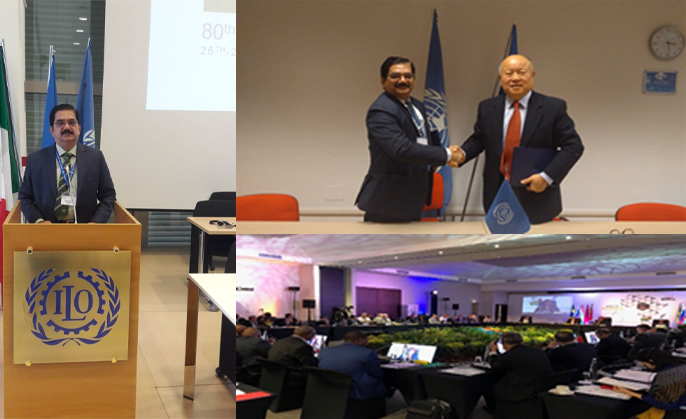
He has travelled extensively in India and Abroad to countries like Switzerland; South Africa, Russia, Italy, Singapore, Malaysia, USA and UK. His training interventions at the International Labour Organisation and the BRICS Network of Labour Research Institutions as well as Conceiving and Signing the MoU’s with the International Training Centre of the International Labour Organisation (ITC-ILO) while being on their Board and BRICS Network of Labour Research Institutions, have been well appreciated by the Government.